About Us
Welcome to SfdcIndia, where we specialize in empowering professionals with cutting-edge SfdcIndia training.
Contact nowContact Info
- CV Complex,
Above Bata Showroom,
Hastinapuram, BN Reddy,
Hyderabad, Telangana 500079. - +91-7097777111
- info@sfdcindia.com
Javascript for LWC
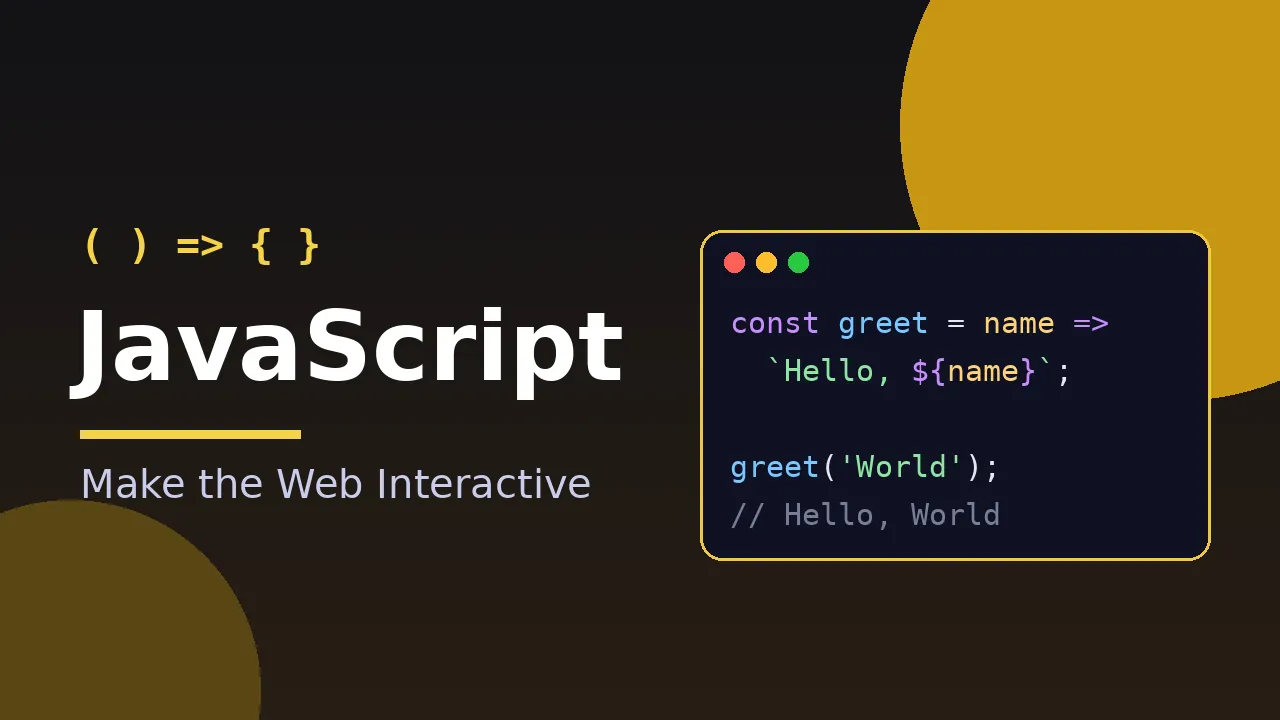
About JavaScript
Core JavaScript for Salesforce & LWC Developers
This guide contains only the essential JavaScript concepts required before learning Salesforce Lightning Web Components.
1. Variables
Use const by default and let when the value needs to change.
Example:
const company = 'SFDCINDIA';
let course = 'LWC';
2. Data Types
Important JavaScript data types:
- String
- Number
- Boolean
- Undefined
- Null
- Object
- Array
3. Operators
Core operators:
Best practice: prefer === instead of ==.
- Arithmetic: + - * / %
- Comparison: > < >= <=
- Equality: === and !==
- Logical: && || !
4. Conditions
Use:
These control which logic should run based on a condition.
- if
- else if
- else
- switch
- ternary operator
5. Loops
Important loops:
for...of is useful when reading array values.
- for
- while
- for...of
6. Functions
Understand:
Arrow functions are very common in modern JavaScript and Salesforce LWC.
- Normal functions
- Arrow functions
- Parameters
- Return values
7. Strings
Useful String methods:
- length
- toUpperCase()
- toLowerCase()
- includes()
- replace()
- slice()
- trim()
8. Arrays
Important Array concepts:
These are extremely important for handling Salesforce record collections.
- Accessing values
- push()
- pop()
- forEach()
- map()
- filter()
- find()
- reduce()
9. Objects
Objects store data as key-value pairs.
Important skills:
Salesforce records are commonly handled as JavaScript objects in LWC.
- Read properties
- Update properties
- Add new properties
- Work with nested objects
10. Destructuring
Destructuring extracts values from arrays or objects.
This makes JavaScript code shorter and cleaner when working with Salesforce data.
11. Spread Operator
The spread operator (...) is very important in LWC.
Common uses:
- Copy arrays
- Copy objects
- Add new values
- Update one property while preserving other properties
12. Optional Chaining
Optional chaining uses ?.
Example concept:
account.owner?.name
It helps avoid errors when a nested value may not exist.
13. Classes
JavaScript classes contain properties and methods.
Salesforce connection:
Every Lightning Web Component class extends LightningElement.
14. Scope
Understand:
let and const use block scope.
- Global scope
- Function scope
- Block scope
15. Callbacks
A callback is a function passed to another function.
Array methods such as map(), filter() and forEach() use callbacks.
16. Promises
Promises represent asynchronous results.
Main states:
Promises are important when working with asynchronous Salesforce operations.
- Pending
- Fulfilled
- Rejected
17. async and await
async/await makes asynchronous JavaScript easier to read.
Common LWC pattern:
- Call Apex
- Wait for response
- Store returned data
- Handle errors
18. Error Handling
Use try and catch to handle errors safely.
This is important when calling Apex or working with asynchronous code.
19. JSON
Important JSON methods:
JSON is heavily used in Salesforce integrations and API communication.
- JSON.stringify()
- JSON.parse()
20. Events
Understand:
Events are fundamental in LWC user interactions.
- Click events
- Change events
- Event object
- event target value
21. Immutability
Instead of directly changing existing data, create a new array or object.
This is a good pattern for predictable LWC state updates.
22. Modules
JavaScript modules use import and export.
LWC uses module imports for framework features, Apex methods, schema references and other Salesforce resources.
Most Important for Salesforce LWC
- Functions and Arrow Functions
- Arrays and Objects
- map(), filter(), find() and reduce()
- Destructuring
- Spread Operator
- Promises
- async / await
- Events
- JSON
- Error Handling